Beyond the Known Waters
The story of Faraway, from its earliest expeditions to what lies ahead.
Rankin had been telling us about this place for years.
Somewhere beyond Guanaja, out along Honduras’s remote coast, there were cayes, endless flats, and an enormous stretch of water he insisted we needed to see. When Rankin talks about fishing, we listen. Eventually, curiosity got the better of us.
We found a Canadian pilot in Roatán willing to help us explore, and off we went. What we found was a quiet little caye surrounded by more water than we knew what to do with. Standing there, with the Caribbean stretching out in every direction, we started imagining what might be possible.
Finding a place worth fishing was one thing. Figuring out how to build a camp there was another.
The caye wasn’t waiting for us with a welcome sign. For years, local fishermen had used it to store traps at the end of the season, and the ground itself had been built up by hand, bucket after bucket of sand. It was working land long before anyone dreamed of bringing fly anglers here.
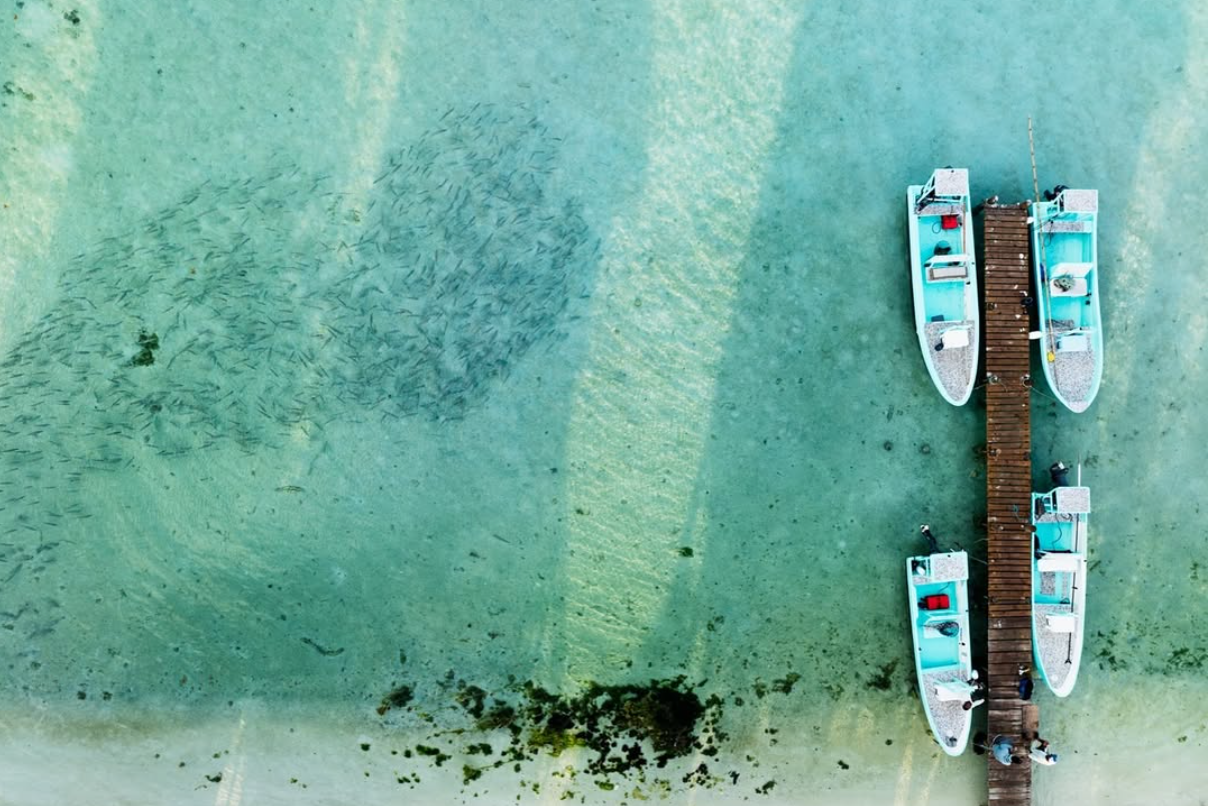
Those old trap platforms became the foundations of our first camp. We laid plywood across them, built small decks, and put up yurts. Power came from generators. Fresh water arrived in tanks and had to be hauled out regularly. Everyone shared one bathroom, and dinner was served at a picnic table in the open. There was no road, no maintenance crew, and no easy way to get something you’d forgotten. Everything arrived by boat, and whatever broke had to be fixed with what we had.
But the fishing was there, and so were the guides. They knew how the tides moved, where the fish would travel, and how to read flats and channels that looked like a maze to everyone else. They already knew this part of Honduras. We were the ones catching up.
Each trip revealed more: more flats, more channels, more water we wanted to explore. Permit, bonefish, barracuda, and a remarkable diversity of marine life. The permit fishing in particular turned out to be something special. Some days an angler has barely finished processing one shot before a guide is pointing out the next, and anyone who has chased permit knows what that means. The fish still get the final say, of course.
Getting guests there was its own adventure. For years, Fly Fish Guanaja operated from our lodge on Jones Caye, and a helicopter would land right on the small beach, pick up guests, and carry them roughly 160 miles across open ocean to Faraway. One minute you were standing on the sand, the next you were lifting off over the Caribbean toward a tiny caye far beyond the usual fishing grounds.
We worked with Honduran military pilots and helped fund emergency flotation equipment for their helicopter, in case of a landing on open water. We took those precautions seriously. But over time we started asking whether the thrill and convenience of the crossing justified the risk.
Eventually, the answer was no.

Steve Brown and his team began looking for another way. Today the journey starts with a twin-engine flight from Roatán to Puerto Lempira, followed by a boat transfer with captains who grew up running these waters. It’s still an expedition, but a safer one. We loved the helicopter days, and they were a real chapter in our story. Knowing when to change course is part of operating somewhere like this.
Back on the caye, salt, wind, and years of Caribbean weather were wearing down the yurts. Rather than keep patching them, we built cabanas, each with its own private bathroom. Solar power replaced the generators. Desalination meant we could make our own fresh water instead of hauling tanks out every few weeks. The little kitchen behind the old cabin became a proper working kitchen, with a covered, screened lodge where everyone gathers.
Even the caye’s original purpose has changed. Honduran regulations and the local fishing industry have evolved, and the traps that gave this land its purpose can no longer be stored there.
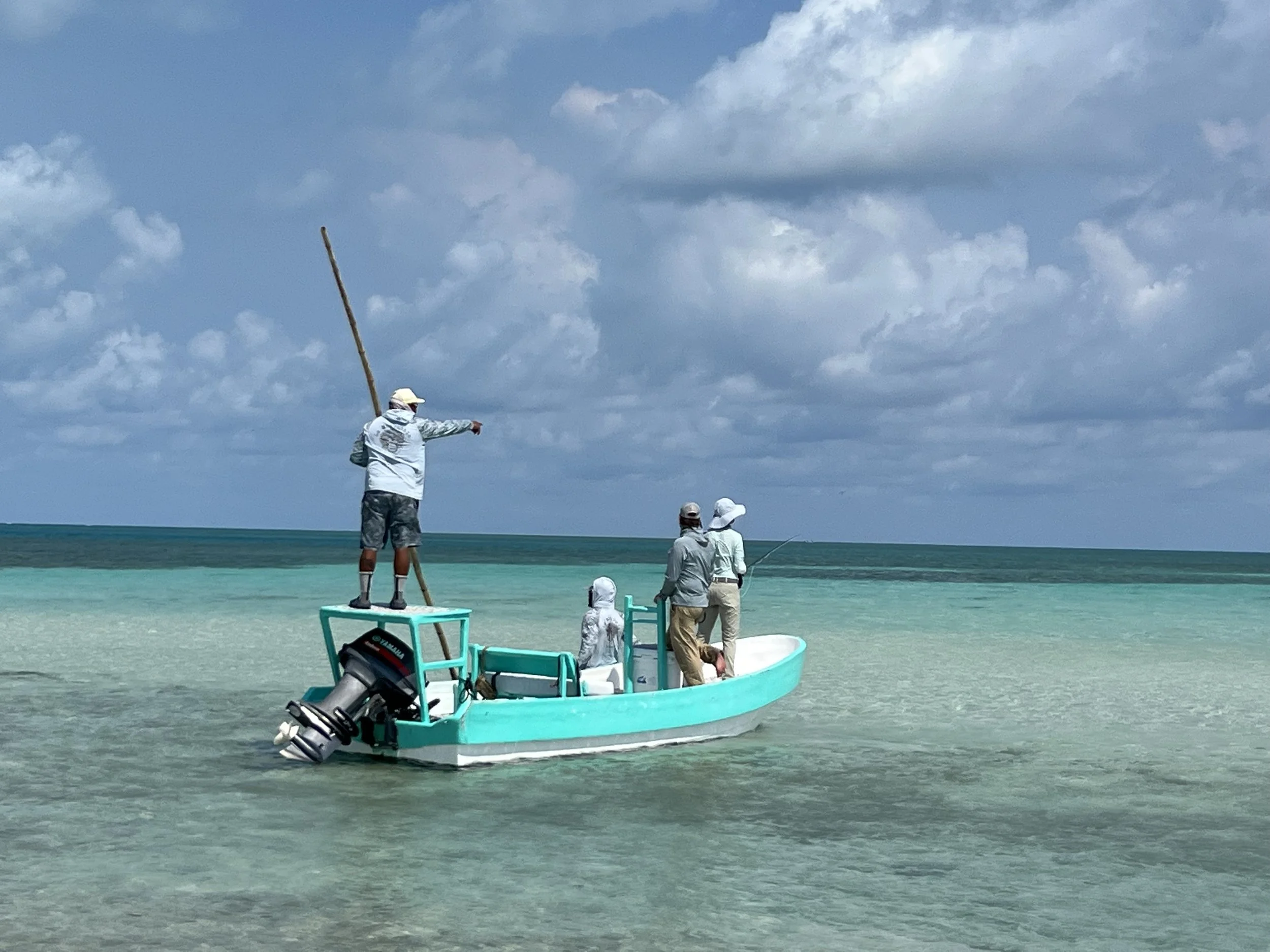
Still, we’ve never wanted to make Faraway bigger. There are no more than eight anglers at a time, and the caye is tiny. Beyond it lies a fishery that even a full week barely begins to explore.
We also keep the season short. We fish only four months a year, February through May, and we rotate our weeks across the fishery so no one stretch of water takes the pressure week after week. Even within those months, the fishery rests. That’s a big part of why the fishing stays what it is, and it’s a trade we’re glad to make.
After more than twenty years in Honduras, we know a lot about what it takes to reach places like this, and what it takes to protect them. We also know how much we haven’t seen.
Rankin told us there was something out there worth exploring. He was right……... and he’s been saying it again.
We’re still curious about what lies farther out.
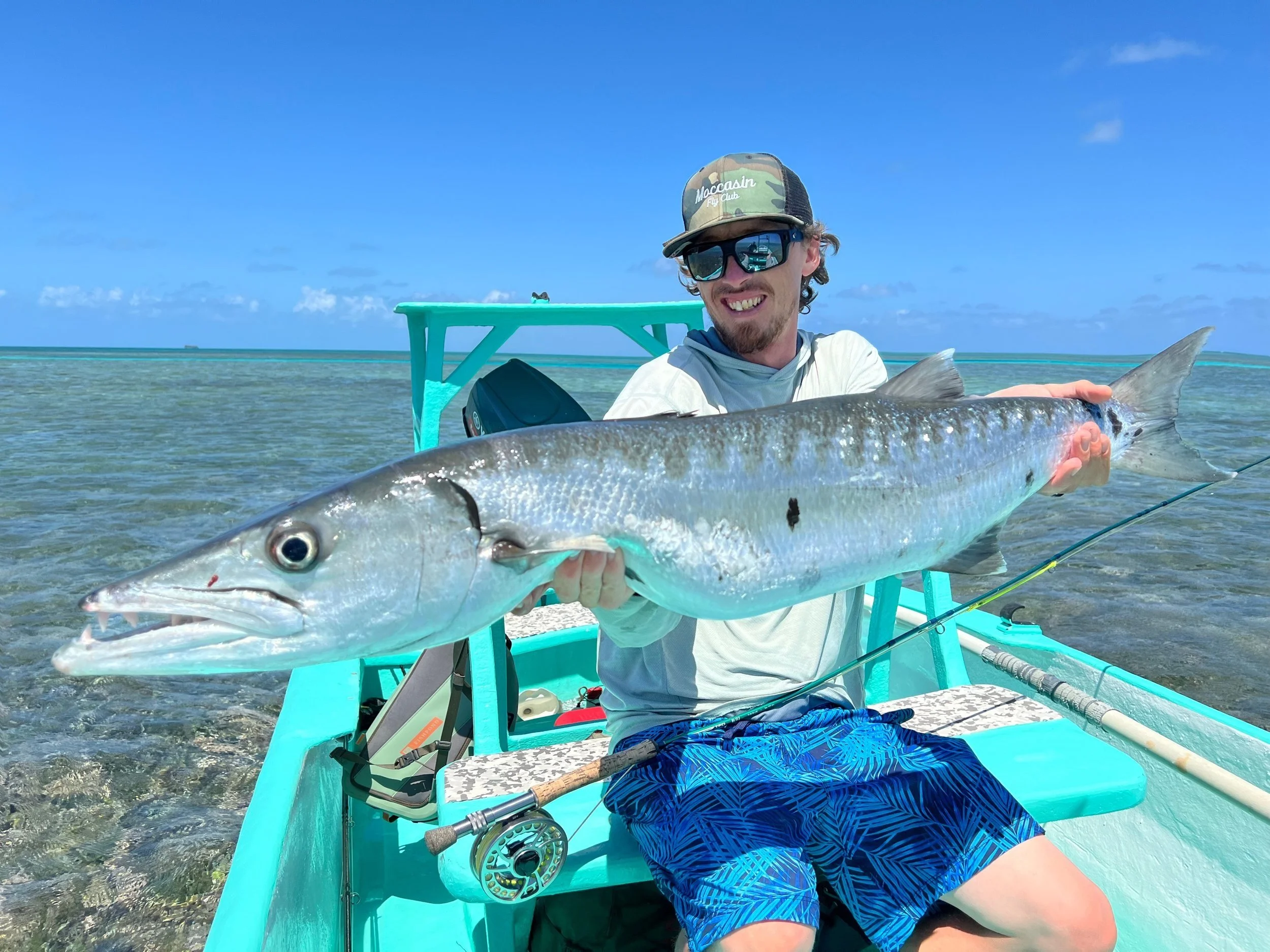
Thanks Trent Jones, Nick Price and Shannon Vandivier (and anyone else I am unaware of your names) for the rad photos.
Beckie Clarke
